About The Author: Travis Baugh is a Digital Brand Marketing Manager for Bryant, where he creates clear, helpful content to guide homeowners through heating, cooling, and indoor air quality decisions. His goal is to empower readers with the knowledge they need to choose the right comfort solutions for their home—confidently and comfortably.
Thermostat Buying Guide: Choosing the Right Control for Your Home
Choosing the right thermostat is the first step toward transforming your home’s comfort and efficiency. While the options can seem overwhelming, the choice generally comes down to three main categories: manual, programmable, and smart. This guide breaks down the types of thermostats, critical features to look for, and how to ensure compatibility with your HVAC system so you can make a confident, future-proof investment.
What Are the Different Types of Thermostats?
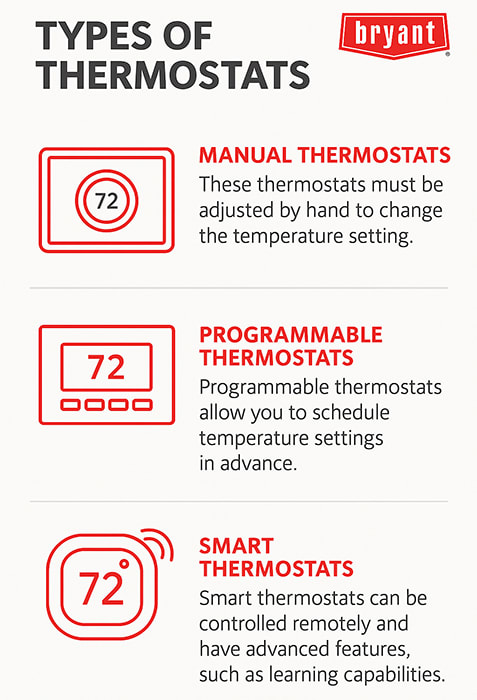
There are three primary types of thermostats available today: manual, programmable, and smart. Manual thermostats offer basic, non-digital temperature control; programmable thermostats allow you to set schedules for different times of day; and smart thermostats connect to Wi-Fi to offer remote control, learning capabilities, and energy usage reports.
Here is a closer look at how each type functions to help you decide which thermostat fits your lifestyle:
Manual Thermostats
Best for: Simplicity and budget-friendly temperature control.
Manual thermostats are the most basic models, featuring a straightforward interface to set your preferred temperature by hand. While they lack automation and advanced features, they are affordable and ideal for homeowners who prefer simplicity over technology.
Programmable Thermostats
Best for: Set-it-and-forget-it schedules that save energy.
Programmable thermostats heighten convenience by allowing you to pre-set temperature schedules based on your routine—such as lowering the heat while you are at work. By aligning your heating and cooling with your daily life, programmable thermostats help optimize energy consumption and reduce energy bills without sacrificing comfort.
Smart Thermostats
Best for: Maximum efficiency, remote access, and "smart" features.
The most advanced option, smart thermostats connect to your home's Wi-Fi network for seamless integration. They enable remote access via smartphone apps, allowing you to adjust the climate from anywhere. Beyond remote control, many models learn your habits to adjust settings automatically in real-time, delivering the highest level of energy efficiency and convenience.
Key Features to Look For in a Thermostat
When comparing thermostat types, prioritize features that deliver long-term value, ease of use, and "efficiency that helps pays for itself."
- Wi-Fi Connectivity and App Control: For modern homeowners, connectivity is essential. Bryant's advanced thermostats let you manage your home's climate from a smartphone or tablet, ensuring you always return to a perfectly comfortable environment.
- Energy-Saving Capabilities: Look for features like geofencing, usage reporting, and adaptive learning. These allow the thermostat to reduce heating and cooling when the house is empty, ensuring energy isn't wasted.
- User-Friendly Interface: Advanced technology shouldn't be complicated. Bryant thermostats feature intuitive touchscreens and clear displays, making it easy for anyone in the household to navigate settings. Investing in a user-friendly interface ensures you get the most out of your system's capabilities.
How Do I Know Which Thermostat is Compatible?
To ensure compatibility, you must identify your existing HVAC system type—whether it is a standard central air system, a heat pump, or a multi-stage system—and check your wiring configuration.
Understanding the C-Wire: Most modern smart thermostats require a "C-wire" (common wire) for continuous power. If your current setup lacks this, some smart thermostats may not function correctly without an adapter or professional rewiring. Compatibility issues can result in inefficient operation or the inability to use features like variable speed motors.
While Bryant thermostats come with installation guides, HVAC systems are complex. We recommend leaving installation to your local Bryant dealer to ensure your new thermostat communicates perfectly with your heating and cooling equipment.
Maximizing Energy Efficiency with Your Thermostat
The right thermostat settings can significantly lower energy bills while maintaining improved air quality and comfort.
- Utilize Scheduling: Whether using a programmable or smart model, align the temperature with your routine. Set the temperature higher in summer and lower in winter when you are asleep or away.
- Leverage Smart Adjustments: Smart thermostats from Bryant take the guesswork out of efficiency. Some models learn your preferences and automatically adjust to the most efficient settings, reducing the load on your air conditioning or furnace.
- Seasonal Adaptation: As the seasons change, so should your settings. Small adjustments of just a few degrees during peak temperatures can lead to significant savings over the course of a year.
When to Upgrade Your Thermostat
You should consider upgrading your thermostat if you notice unresponsiveness, incorrect temperature readings, or if your energy bills are rising despite normal usage.
Upgrading to a modern smart thermostat is a smart investment in your home's value and your personal comfort. Replacing an outdated unit during a renovation or HVAC system replacement ensures you have the technology needed to optimize your equipment's performance. With features like remote access and learning algorithms, a new thermostat offers peace of mind and reliable performance for years to come.
Smart Thermostats from Bryant
Bryant offers a portfolio of innovative, Wi-Fi®-enabled thermostats designed to meet the specific needs of your home.
Evolution™ System Control
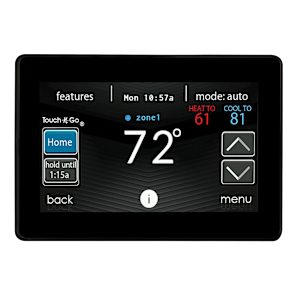
The Evolution System Control is designed to get the most out of your Bryant Evolution heating and cooling system. With Wi-Fi® capability and advanced features, it gives you full control over temperature, humidity, airflow, and more—right from your smartphone or tablet. It supports zoning for up to eight areas, helping you customize comfort throughout your home.
ecobee for Bryant Smart Thermostats
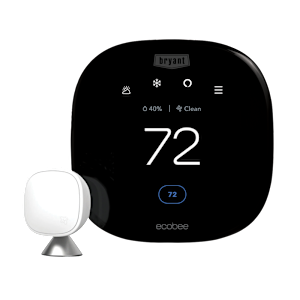
Bryant and ecobee offer a modern take on home comfort with smart thermostats that learn your schedule and help reduce energy usage. When an ecobee for Bryant Smart Thermostat is paired with InteliSense-enabled Performance Series systems and data sharing is enabled, you gain access to remote diagnostics and proactive service alerts. With InteliSense™, your Bryant dealer can monitor system performance and often resolve issues before a service call is needed.
Bryant Smart Thermostat
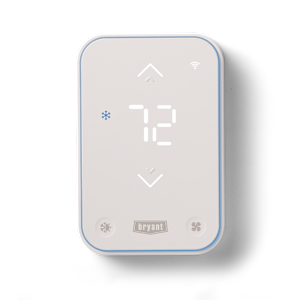
Bryant’s Smart Thermostat provides an affordable way to enjoy connected comfort. Its touch-sensitive display and intuitive interface make it easy to manage your heating, cooling, and fan settings. It supports single- and two-stage systems and integrates with indoor air quality accessories, while the Bryant SmartHome App lets you set up customized schedules. When data sharing is enabled, your dealer can offer faster, more efficient service with real-time insights.
Connect With A Bryant Dealer To Find The Right Thermostat
Looking for the ideal thermostat for your HVAC system? Connect with a Bryant dealer to explore options that are tailored to your system and your home’s needs. They’ll help you select the best fit for optimal comfort, efficiency, and performance. Schedule your consultation today.
Discover Bryant Smart Thermostats
Choose a Bryant Smart Thermostat for enhanced comfort, convenience, and energy savings. With its intuitive interface and Wi-Fi connectivity, you can easily control your home’s temperature from anywhere using your smartphone. The thermostat learns your preferences, optimizing heating and cooling to fit your schedule, reducing energy waste. It’s also compatible with Bryant heating and cooling systems, offering seamless integration and improved performance. Enjoy greater control and efficiency while keeping your home comfortable year-round.
Learn More
- Find out more about wireless thermostats
- Explore how thermostats work
- Learn about thermostat replacement
- Read our energy saving thermostat guide


