
About The Author: Travis Baugh is a Digital Brand Marketing Manager for Bryant, where he creates clear, helpful content to guide homeowners through heating, cooling, and indoor air quality decisions. His goal is to empower readers with the knowledge they need to choose the right comfort solutions for their home—confidently and comfortably.
Your Guide To Air Filter Replacement
Replacing your air filter is essential for maintaining HVAC efficiency and indoor air quality. Most 1-inch filters should be changed every 1–3 months, while thicker media filters can last up to 6 months. To replace it, turn off your system, remove the old filter, and insert the new one with the airflow arrows pointing toward the furnace or blower motor.
An air filter replacement is a simple yet vital task for maintaining your HVAC system’s efficiency and improving your home's indoor air quality. A clean filter captures dust, pollen, and other particles, ensuring your system runs smoothly and provides long-term comfort and reliable performance.
Why is Regular Air Filter Replacement Important?
Regular air filter replacement is the single most effective way to maintain a healthy and efficient home environment. It acts as your home's lungs, filtering out contaminants before they circulate.
Key Benefits of a Clean Air Filter:
- Healthier Air: A fresh filter captures airborne particles like dust and pollen, which is crucial for households with allergy sufferers or respiratory conditions.
- Lower Energy Bills: A clogged filter restricts airflow, forcing your HVAC system to work harder. This "efficiency that pays for itself" approach keeps utility costs down.
- System Longevity: Neglecting AC filter replacement can cause overheating and potential freezing of the evaporator coil, leading to costly repairs.
Mark Lea, co-owner of Lea Heating & Air Conditioning in East Dundee, IL, stresses the importance of regular air filter replacement for homeowners.
“The number one service call we get is for dirty air filters,” Lea said. “Dirty filters can significantly inhibit the performance of both the furnace and the air conditioner. It’s very important to replace the air filter for proper central air conditioner performance. A clogged filter forces the system to work harder, reducing efficiency and performance, shortening the lifespan of the unit, and potentially causing the evaporator coil to freeze. It can also compromise indoor air quality.”
How Do I Choose the Right Air Filter?
Selecting the right air filter is essential for achieving optimal indoor air quality and system performance. Filters are rated using the Minimum Efficiency Reporting Value (MERV), which indicates how effectively a filter removes airborne particles. A higher MERV rating means the filter captures smaller particles, offering better filtration.
Common Filter Types
- Fiberglass Filters (MERV 1-4): Affordable and protect the system from large debris, but less effective at improving air quality.
- Pleated Filters (MERV 5-13): Offer a larger surface area for improved airflow and capture smaller particles like mold spores and pet dander. These are often the best balance for residential homes.
- HEPA Filters: Capture 99.97% of particles. While excellent for air quality, they may require system modifications to ensure proper airflow.
Pro Tip: Always verify the correct size (Length x Width x Depth) for your HVAC system before purchasing. Using the wrong size creates gaps where dirty air can bypass filtration, hindering performance.
How Often Should I Change My Air Filter?
The General Rule: Check your filter every month. If it looks dirty, change it.
The frequency depends on the filter type and your home environment. Lea recommends the following schedules:
- 1-inch disposable fiberglass filters: Change every 30 days.
- 1-inch pleated filters: Change every 60 to 90 days.
- 4- or 5-inch media filters: Change twice a year.
Factors That Shorten Air Filter Lifespan:
- Pets: Shedding and dander clog filters quickly.
- Flooring: Homes with carpet tend to generate more dust than those with hardwood.
- Occupancy: More people moving around kicks up more dust.
- Allergies: If you have sensitive residents, change filters more frequently to ensure superior air quality.
Step-by-Step Guide How to Replace Your AC Filter
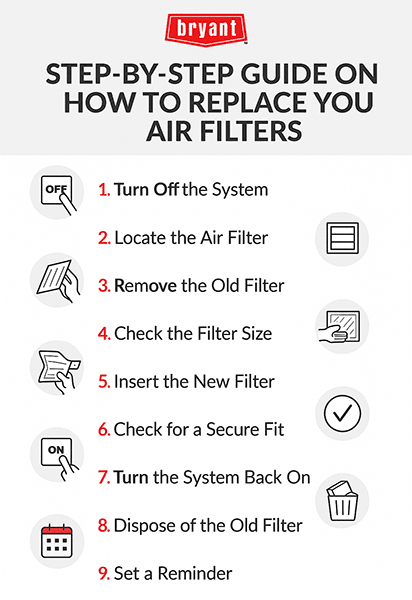 Proper AC filter replacement ensures your system operates efficiently. Follow these simple steps to replace your filter correctly.
- Turn Off the System: For your safety, always turn off your HVAC system at the thermostat or circuit breaker before beginning.
- Locate the Air Filter: The filter is typically located near the return air duct or inside the blower compartment of your furnace or air handler.
- Remove the Old Filter: Carefully slide the old filter out, noting the direction of the airflow arrows printed on the frame.
- Check the Filter Size: Confirm the filter’s dimensions (length x width x depth), which are printed on its side, to ensure you have the correct replacement.
- Insert the New Filter: Slide the new filter into the slot, making sure the airflow arrows point in the correct direction (toward the furnace or air handler).
- Ensure a Secure Fit: Check that the filter is snug and properly seated to prevent air from bypassing it.
- Turn the System Back On: Restore power to the air conditioning system and set your thermostat to its desired temperature.
- Dispose of the Old Filter: Dispose of the old filter according to local guidelines.
- Set a Reminder: Mark your calendar or use a smart thermostat feature to remind you when the next replacement is due.
What Are Common Mistakes to Avoid During AC Filter Replacement?
Replacing your air conditioner filter is straightforward, but a few common mistakes can reduce your system's efficiency.
- Installing the Filter Backwards: Always ensure the airflow arrows on the filter point toward the air handler or furnace.
- Using the Wrong Filter Size: An incorrectly sized filter allows air leaks, leading to poor filtration. Always verify the dimensions in your unit's manual.
- Choosing Low-Quality Filters: Opt for a filter with the appropriate MERV rating for your system to ensure effective filtration without overly restricting airflow.
- Forgetting to Turn Off the System: Always turn off the power to your HVAC unit before replacing the filter to prevent injury or system damage.

Connect With A Bryant Dealer on Air Filter Replacement
For expert advice on air filter replacement and regular AC maintenance connect with a local Bryant dealer. Our dealers provide high-quality filters tailored to your system, ensuring optimal performance and efficiency. Professional air conditioning service helps prolong how long your AC units last and keeps your home comfortable year-round.
Air Filter Replacement FAQs
Air filters should typically be changed every 1 to 3 months, depending on the filter type, household pets, allergies, and overall air quality.
Install the air filter with the arrow pointing toward the blower motor or air handler, which is the direction of airflow through the system.
Check for signs like a visibly dirty filter, reduced airflow, increased dust, or an unusual musty smell coming from the vents.
Failing to change the air filter can cause reduced airflow, higher cooling bills, system strain, and even premature AC failure.
Symptoms include poor airflow, hot or cold spots, increased dust buildup, allergy flare-ups, and a spike in energy usage.
No, you should never run your AC without a filter. Even running it for a few hours can pull dust and debris into the internal components, potentially damaging the blower motor or clogging the evaporator coils.
The arrow on the filter frame indicates the direction of airflow. It should always point toward the furnace or air handler (the unit that blows the air) and away from the return air duct (the vent that pulls air in).
A black air filter can indicate soot from candles, mold growth due to humidity, or carbon monoxide issues. If you suspect mold or a gas leak, contact a professional immediately.
Learn More About Air Conditioners
- Explore AC replacement
- Understand AC tune ups
- Discover the factors in choosing what size air conditioner you need
- Get help with an AC not working or AC not blowing cold air
- Learn how to clean AC coils and how to clean air conditioners


