About The Author: Travis Baugh is a Digital Brand Marketing Manager for Bryant, where he creates clear, helpful content to guide homeowners through heating, cooling, and indoor air quality decisions. His goal is to empower readers with the knowledge they need to choose the right comfort solutions for their home—confidently and comfortably.
Types of Furnaces: A Comprehensive Guide for Homeowners
The four primary types of furnaces used in residential homes are natural gas, electric, oil, and propane. While natural gas is the most common choice due to its balance of efficiency and cost, electric furnaces offer quiet operation for milder climates, and oil or propane models provide powerful heating solutions for regions without gas infrastructure.
Choosing the right system involves balancing your local climate, fuel availability, and long-term energy efficiency goals.
How Do Furnaces Work?
A furnace is the heart of a home’s central heating system, designed to generate warmth and distribute it evenly throughout your living space.
The process begins when the thermostat signals a need for heat. The furnace activates its fuel source (gas, electricity, oil, or propane) to warm a heat exchanger or heating coils. A blower motor then pushes air across these heated components, circulating the warm air through ductwork into your rooms. what is a furnace.
Key Components
- Heat Exchanger: A vital component that transfers heat from the combustion process to the air you breathe, ensuring safety and efficiency.
- Blower Motor: The fan that drives air circulation; variable-speed motors offer quieter operation and better humidity control.
- Thermostat: The "brain" of the system that regulates temperature and can integrate with smart home technology for enhanced control.
Understanding these components is essential for homeowners considering upgrades or furnace replacement. Whether you seek a conventional gas furnace or a high efficiency furnace, Bryant offers solutions tailored to your comfort requirements.
Types of Furnaces
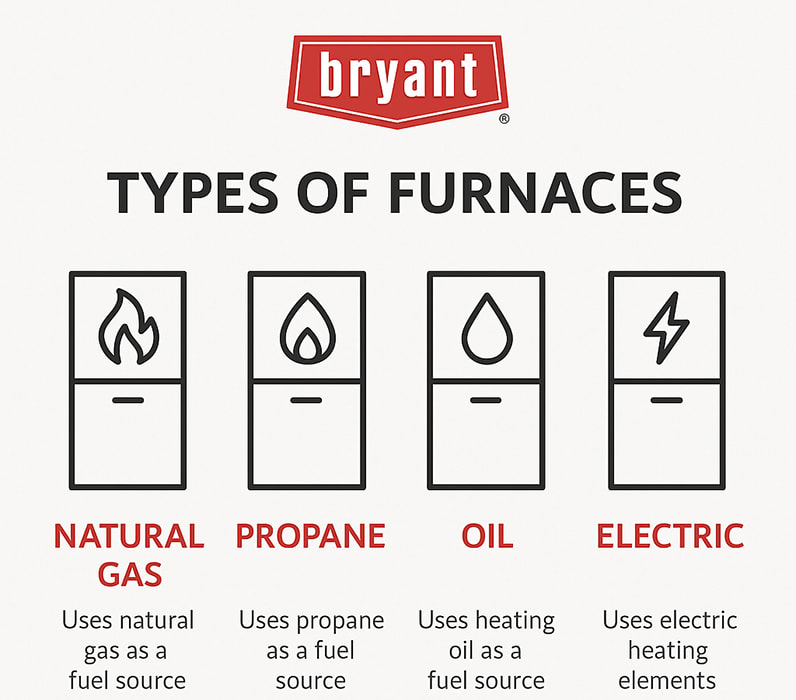
When selecting a heating system, it is vital to match the fuel source to your home's infrastructure and your region's utility costs. Here are the most popular furnace types:
1. Natural Gas Furnaces
Natural gas furnaces are known for their efficiency and cost-effectiveness, heating air quickly and providing consistent warmth. Modern models incorporate safety features and reduced emissions to boost their environmentally friendliness.
2. Electric Furnaces
Electric furnaces use heating elements (coils) to generate heat. Ideal for homes without natural gas access or in warmer climates, they provide reliable heating. While the units are often cheaper to install, operational costs can be higher in areas with expensive electricity. Understand gas vs electric furnaces
3. Oil Furnaces
Oil furnaces burn heating oil stored in a tank and are mainly used in the Northeast and other areas where oil is more accessible than gas lines. They produce powerful heat, making them a viable option in colder climates, though fuel costs can fluctuate.
4. Propane Furnaces
Propane furnaces store liquid propane in tanks, offering a practical choice for rural areas lacking natural gas access. Similar in efficiency and performance to natural gas models, they serve as a reliable heating source in colder months.
Comparing Different Types of Furnaces
To make an informed decision, you must weigh efficiency ratings, environmental impact, and furnace maintenance needs.
Efficiency Ratings (AFUE)
Efficiency ratings indicate energy consumption relative to heat production.. AFUE (Annual Fuel Utilization Efficiency) measures how efficiently a combustion furnace converts fuel into heat.
- Combustion Furnaces (Gas, Propane, Oil): Modern units often exceed 90% AFUE, meaning 90% of fuel becomes heat and only 10% escapes.
- Electric Furnaces: These typically operate at 100% AFUE because they do not lose heat through exhaust, though electricity costs may still be higher than gas.
Environmental Impact
Gas models generally emit fewer greenhouse gases than oil furnaces. Electric furnaces offer the cleanest onsite operation, especially when powered by renewable energy sources.How Long Does a Furnace Last?
How long a furnace lasts depends more on maintenance than fuel type. With proper care, most furnaces operate efficiently for 15–20 years. Regular furnace maintenance is the key factor in longevity.
Factors to Consider When Choosing a Furnace
Selecting the right furnace involves evaluating key factors impacting comfort and efficiency.
- Furnace size: A unit that is too small leaves you cold; one that is too large cycles on and off constantly, wasting energy.
- Local climate: Colder regions often require high-efficiency gas or oil furnaces for affordable warmth.
- Energy costs: Compare local rates for electricity vs. gas to determine long-term operating costs.
- Budget, financing options, and rebates: Look for financing options and utility rebates on high-efficiency models to offset upfront costs.

Bryant Furnace Solutions
Bryant offers a wide range of furnace solutions tailored to diverse residential heating needs. Our lineup includes gas and oil models, ensuring homeowners find the ideal system for specific requirements.
Bryant’s Evolution™ Series furnaces feature high energy efficiency, optimizing fuel consumption to reduce bills and minimize environmental impact.
- Modulating Gas Valves: Provide precise temperature control, eliminating cold spots.
- Variable-Speed Blowers: Ensure consistent airflow and quieter operation, so you feel the comfort, not the system.
- Perfect Heat™ Technology: Adapts intelligently to changing weather conditions for optimal efficiency.
- Perfect Humidity™ Technology: When paired with a matched AC or heat pump, this feature removes excess moisture for improved indoor air quality.
Connect With A Bryant Dealer On Types Of Furnaces
Connect with a Bryant dealer to get expert guidance on choosing the furnace type that best fits your home, climate, and energy preferences. A Bryant professional can evaluate your specific needs and recommend the most efficient and cost-effective solution. Their experience ensures proper sizing, installation, and long-term performance. Schedule an appointment today.
Explore Bryant Furnaces
Choose a Bryant furnace for reliable, efficient heating that keeps your home comfortable throughout the winter. Known for their durability and advanced technology, Bryant furnaces offer quiet operation, precise temperature control, and energy-saving features like variable-speed motors and 2-stage heating. With a range of models to suit different home sizes and needs, Bryant furnaces are built to last and come with industry-leading warranties, providing peace of mind and long-term value for your home heating system.
Furnace Type FAQs
The three main types of furnaces are gas, electric, and oil, each using different fuel sources to heat your home.
High-efficiency gas furnaces are generally the most efficient, often reaching 90–98% AFUE (Annual Fuel Utilization Efficiency).
Most furnaces can accommodate a whole-home humidifier, but compatibility depends on the furnace type and duct system.
Gas furnaces are the most common in U.S. homes due to their efficiency and availability of natural gas.
Learn More About Furnaces
- Learn how much is a new furnace
- Discover what is a heat pump vs furnace
- Find out how long does a furnace last
- Learn about the importance of furnace cleaning
- Understand the ins and outs of a furnace tune-up
- Explore down flow furnaces


